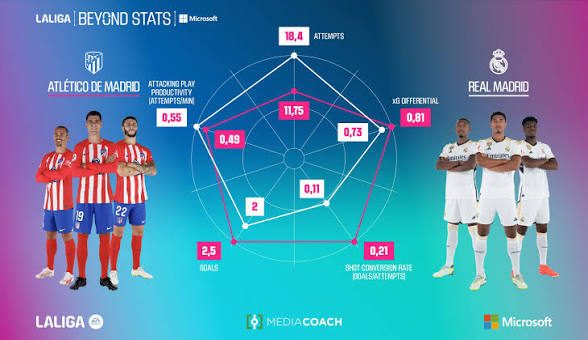

Stats apps turn La Liga 2017–2018 from a list of fixtures into a live data source you can actually use before placing a bet. The season’s full results, standings, and detailed team numbers are still accessible through league archives and mobile tools, which means you can reconstruct match contexts instead of guessing from memory. When you connect those app‑based statistics to a clear pre‑match routine, the data stops being noise and starts shaping more deliberate decisions.
What La Liga 2017–2018 Stats Apps Can Actually Provide
Most La Liga‑focused apps and sites for the 2017–2018 season give a mix of standings, fixture lists, live scores, and deeper numbers covering goals, clean sheets, scorers, and team performance trends. Some tools specialise in league tables and recent results, while others offer player ratings, xG‑style metrics, or breakdowns of home and away form. The impact for bettors is that you no longer rely on vague impressions of “good” or “bad” form; you can ground your pre‑match opinions in concrete patterns captured during that specific La Liga campaign.
Which Team and Match Metrics Matter Most Before You Bet
Not every statistic in an app helps you form a better price estimate, so it pays to focus on those with the strongest link to match outcomes. Guides on data‑driven betting and team analysis highlight recent form, home‑away splits, goal averages, defensive records, and motivation (title race, European spots, or relegation battle) as especially useful starting points. For La Liga 2017–2018, checking how a team performed in the last five games, how many goals it scored and conceded over the season, and whether its record at home or away diverged sharply from the league average often reveals where narrative and numbers disagree.
Mechanism: From Raw App Stats to a Simple Match View
To turn app data into a pre‑match picture, you combine several metrics into one mental frame instead of looking at them in isolation. A sensible sequence is to start with league position and basic season totals, then overlay recent form, home/away splits, and injury or suspension information where available. For example, if the app shows that a mid‑table La Liga side scored freely at home all season but struggled away, and its upcoming 2017–2018 fixture is on the road against a defensively solid opponent, your expectation for total goals and win probability should shift accordingly; the impact is that each stat becomes a cause for adjusting your baseline view rather than a random number.
Building a Repeatable Pre‑Match Checklist Inside the App
Instead of opening a stats app and scrolling aimlessly, you gain more by running through the same pre‑match checklist for every La Liga game you consider. Contemporary analysis guides recommend structured steps—recent form, home/away performance, league context, injuries, head‑to‑head, and key player data—as a way to move from raw figures to a reasoned opinion. With La Liga 2017–2018 archived in multiple databases, you can still follow that sequence retroactively, treating each historic match as a training example in reading stats.
Illustrative pre‑match checklist using a 2017–2018 stats app
A well‑designed checklist forces you to look at stats in a logical order and prevents you from overreacting to one eye‑catching number. For La Liga 2017–2018, that order can start broad and narrow down, using the app’s screens or filters to answer each question in turn. This approach matches modern advice on soccer analysis, where form, venue, and motivation are combined before you think about specific bet types.
- Recent form: check each team’s last five La Liga matches for wins, draws, and losses, plus goals scored and conceded.
- Home vs away: compare the home side’s home record with the away side’s away record in the 2017–2018 table and stats pages.
- League position and motivation: note current standings, points gap, and whether either team is chasing the title, Europe, or avoiding relegation.
- Head‑to‑head: review past meetings between the clubs in that season and prior years, looking for consistent patterns (e.g. low‑scoring clashes).
- Team and player stats: identify top scorers, assist leaders, and defensive records, especially clean sheets and goals allowed.
- Schedule context: use fixture lists to see whether either team recently played in cups or Europe, which can affect fatigue and rotation.
Running through this list in the app means you arrive at the odds screen with a structured view of the match instead of an emotional hunch. Each step provides a specific cause for adjusting your expectations up or down, and the combined impact is a more coherent estimate of how often different outcomes should occur.
Using App Data to Challenge Your First Impression
Most bettors approach a match with an initial feeling—perhaps that a big club in La Liga 2017–2018 “should win easily” or that a mid‑table side is underrated. Stats apps are most valuable when they test that first impression rather than simply confirming it. If the data show that the supposed favourite struggled away all season or that the underdog has a strong defensive record at home, your original confidence should weaken, prompting either a smaller stake, a different market, or no bet at all. The impact is that the app acts as a filter against lazy narratives, making it harder to justify bets that conflict with the season’s actual numbers.
Within this process, the way your betting environment presents information also matters. When a sports betting service such as เว็บ ufa168 displays pre‑match La Liga markets alongside only minimal statistics, you can use your external stats app as a balancing force: instead of reacting to highlighted odds or promotions, you check those prices against the patterns your app reveals from the 2017–2018 season; this contrast between promotional screens and independent data reduces the chance that marketing pushes you toward bets the numbers do not support, and ties your decisions more tightly to the analysis you have just completed.
Combining App Stats with Price Information Instead of Ignoring Odds
Numbers from a La Liga stats app only become actionable once you compare them to actual betting prices. Data‑driven guides stress that an edge exists only when your estimated probabilities derived from stats differ meaningfully from the implied probabilities in the odds. After using the app to gauge form, goals, and defensive strength, you can assess whether the market is over‑ or underestimating a team; for example, a side with consistently strong 2017–2018 performance might still be priced generously away from home if public perception lags behind the numbers. The impact is that the app stops being a general info source and becomes a tool for flagging specific spots where the relationship between data and price looks favourable.
Comparing Different Markets Using the Same App Data
The same statistical picture can point to different bet types depending on how you interpret it. A match where both La Liga teams showed high scoring averages and weak defences across the 2017–2018 season may suggest value in total goals or both‑teams‑to‑score markets rather than in picking a winner. Conversely, a fixture involving a defensively strong favourite and a low‑scoring underdog might encourage a handicap or correct‑score angle. When you use the app to evaluate goals, clean sheets, and shot‑related indicators for both sides, you are effectively mapping raw stats onto different possible bets, and the outcome is a more precise choice that aligns with how the numbers say the game tends to unfold.
Where Stats Apps Strengthen Your Pre‑Match Edge
Stats apps add the most value when they capture trends that are not fully reflected in surface‑level narratives. Over a long campaign like La Liga 2017–2018, those trends include teams that quietly excel at home, sides that consistently underperform away, or clubs whose defensive record improves after a tactical shift mid‑season. Because apps let you filter by time period and venue, you can quickly see whether a recent upturn in results is supported by better underlying numbers or driven by a run of favourable opponents and luck. The impact is that you identify spots where the market may still be anchored to early‑season perceptions, giving you a temporary edge while prices adjust.
At the same time, apps that offer cleaner visualisations and filters make it easier to spot these edges under time pressure. Mobile tools that summarise La Liga 2017–2018 stats with clear tables, graphs, and sorted leaderboards reduce cognitive load, letting you spend more effort on interpretation and less on navigation. This matters when you are assessing several matches in a short window, because a smoother information flow enables more consistent analysis across the entire matchday.
Common Ways Stats Apps Mislead Bettors
Despite their benefits, apps also encourage mistakes when users cherry‑pick numbers or ignore context. Focusing on very small samples—such as the last one or two games—can exaggerate hot or cold streaks that are mostly random, especially in a league where schedule difficulty varies round by round. Similarly, overemphasising head‑to‑head results without considering squad changes or managerial shifts from earlier seasons of La Liga can create the illusion of a “bogey team” effect that no longer applies in 2017–2018. The impact is that even accurate stats, when misused, can reinforce emotional narratives instead of correcting them, leading to confident but poorly grounded bets.
In parallel, relying solely on app numbers without cross‑checking against official fixtures and results can cause subtle data errors to compound over time. Different sources occasionally disagree on details such as listed kick‑off times, competition filters, or classification of extra‑time and penalty outcomes, so using only one app as your reference point may hide small inconsistencies. To reduce this risk, many bettors check key information against multiple La Liga archives or league websites before finalising their pre‑match notes.
Integrating Stats Apps into a Broader Pre‑Match Workflow
The strongest use of a 2017–2018 stats app comes when it supports, rather than replaces, your wider pre‑match workflow. Data guides emphasise combining quantitative indicators with qualitative information—injury news, tactical reports, and schedule congestion—to build a richer model of each match. In practice, you might start by scanning app‑based numbers to shortlist fixtures where the stats suggest potential value, then read match previews or team news to check whether factors like suspensions or lineup changes confirm or undermine that initial view. The outcome is a layered approach where the app provides the statistical backbone, while external sources and your own judgment handle nuances the numbers cannot fully capture.
In many cases, bettors also weave their stats‑app routine into the tools provided by the companies that handle their bets. When your chosen betting destination offers easy access to historical odds, simple exports, or built‑in analytics, it becomes simpler to align what the La Liga 2017–2018 stats say with how you actually staked money over the season; this alignment helps you test whether patterns you identified in the app translated into profitable decisions or whether you still tended to override the data based on gut feeling at the moment of placing the wager.
Summary
Using stats apps for La Liga 2017–2018 pre‑match analysis is less about downloading the perfect tool and more about structuring how you read the numbers it presents. By focusing on form, home‑away performance, goals, defence, and motivation, and by running through a consistent checklist before you even look at odds, you let data guide your expectations rather than emotion. When those expectations are then tested against prices, cross‑checked across sources, and combined with team news in a broader workflow, the information inside your La Liga apps stops being a collection of charts and becomes a practical edge that shapes which matches you bet, which markets you choose, and how confidently you stake your money.