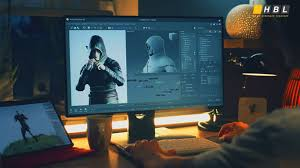

The ambition to build a digital universe has historically been met with the daunting reality of complex syntax and years of mathematical study. For decades the act of creation was locked behind a heavy door of technical expertise where only those who could master the abstract languages of machines were permitted to enter. However we have reached a magnificent turning point in 2026. The evolution of generative technology and high level visual logic has transformed the landscape into an open field where the only requirement for entry is a creative spark. This guide is designed to serve as a blueprint for the aspiring architect who wishes to transition from a passive consumer to an active producer of interactive media without ever having to write a single line of traditional code.
The Mental Shift From Player to Architect
The first and perhaps most critical step in the journey is a shift in perspective. When you are a player you are focused on the experience of the world as it is presented to you. When you become a creator you must begin to look at the world through a systemic lens. You must start asking why a specific action feels satisfying and how different rules interact to create a challenge. Modern tools facilitate this shift by allowing you to work directly with the logic of the world.
Using a no-code game maker allows you to see the relationships between objects in a visual and intuitive way. Instead of thinking about the text of a script you are thinking about the flow of an experience. You are moving from a state of implementation where you struggle with the tools to a state of curation where you are selecting the best possible outcomes for your players. This psychological liberation is what allows a beginner to move from zero to a published project in a remarkably short amount of time.
Case Study in Physics and Logic: Cut the Rope
A perfect example of how a simple and elegant core mechanic can be scaled into a global phenomenon is the beloved title Cut the Rope. This experience is a masterclass in physics based puzzle design where the objective is deceptively straightforward: cut a series of ropes to deliver a piece of candy into the mouth of a waiting character. Despite this simplicity the game requires a deep understanding of timing and problem solving skills as the player navigates a world of swinging momentum, gravity, and increasingly complex obstacles.
What makes this game a brilliant blueprint for beginners is its focus on the “tactile” feel of the world. The physics are consistent and the feedback is immediate. When you build a game using modern visual tools you are often working with these same types of physical logic blocks. You can set up a rope physics system or a gravity constant by simply moving a slider. The success of Cut the Rope lies in its ability to provide relaxing yet engaging gameplay that slowly introduces complexity. This is the exact philosophy a beginner should adopt: start with a single satisfying interaction and slowly build a world around it.
The Three Pillars of the Beginner’s Blueprint
To move from a total novice to a successful creator you must focus on three essential pillars of design. These pillars ensure that your project is not just functional but also engaging for a global audience.
1. The Atomic Loop
Every successful game is built on an atomic loop—the smallest repeatable action that the player performs. In a racing game it is the turn; in a puzzle game like Cut the Rope it is the cut. You must use your game maker online to refine this single action until it feels perfect. If the basic movement of your character or the physics of your objects do not feel good then no amount of extra features will save the project.
2. Immediate Feedback
The player must always know that their actions are having an effect. This is achieved through sensory feedback—sounds, visual effects, and haptic responses. Modern builders allow you to trigger these effects instantly without any manual programming. A simple flash of light when a goal is reached or a satisfying “click” sound when a rope is cut can be the difference between a project that feels “cheap” and one that feels professional.
3. Progressive Complexity
Do not overwhelm the player with every mechanic at once. Introduce a single rule, let the player master it, and then introduce a new variable that interacts with that rule. This creates a sense of growth and achievement. By using the visual logic gates of a no-code game maker you can easily manage this progression by unlocking new elements as the player moves from one level to the next.
Engineering for Global Accessibility
One of the greatest advantages of the modern era is that the tools for creation are just as accessible as the games themselves. When you build a project on a platform like Astrocade you are creating something that can be accessed by anyone with a web browser. This removes the hardware gatekeeping that once defined the industry.
By hosting your work as one of the many Online Free Games available on the web you are opening your story to billions of people. You do not need to worry about the player having a powerful graphics card or a specific console. This universal accessibility is the primary driver behind the growth of the modern social gaming platform. It allows a creator in one part of the world to share their unique cultural perspective with an audience in another part of the world instantly.
The Viral Lifecycle of the Simple Idea
Many beginners feel they need to build a massive open world to be successful. However history shows that the most Viral games are often the simplest ones. A clever puzzle mechanic or a high stakes reflex challenge can spread across the internet much faster than a complex narrative epic. This is because a simple idea is easy to communicate in a five second video clip.
When you allow people to play with friends online you are adding a layer of social competition that acts as a natural marketing engine. People love to share their high scores or their clever solutions to a difficult puzzle. By focusing on these shareable moments you are increasing the chances of your project achieving massive organic growth. The speed of the modern no-code workflow allows you to respond to community feedback in real time, pushing updates that keep the conversation going.
Leveraging AI as Your Creative Partner
In 2026 you are not building in a vacuum. You have access to a powerful creative partner in the form of artificial intelligence. If you are a writer who struggles with art or an artist who struggles with logic the AI can fill in the gaps. You can describe a “lush jungle environment” or a “gravity defying physics puzzle” and the tool will generate the foundation for you to build upon.
This synergy allows you to stay at the “director” level of the project. You are making the high level decisions about the mood, the theme, and the emotional impact of the experience while the machine handles the technical implementation. This is the true meaning of being a creator in the modern era. You are not a worker in a factory; you are the architect of a vision.
The Psychological Reward of Creation
There is a profound sense of satisfaction that comes from seeing other people interact with something you have built. When you see a player solve a puzzle that you designed or achieve a high score in an arena you created it provides a level of fulfillment that consumption can never match. This psychological reward is what drives the most successful independent creators to keep building and keep learning.
The no-code movement has made this reward available to everyone. It has turned the act of creation into a form of play itself. When the process is this fast and this intuitive the boundary between building and playing begins to vanish. You are building while you play and you are playing while you build. This is the most healthy and productive state for a creator to be in.
Final Thoughts: The First Step is the Only One That Matters
The transition from zero to a creator is not a journey of a thousand miles; it is a journey of a single choice. The technical walls have been permanently dismantled and the gatekeepers have been retired. The tools are ready and the global audience is waiting for a new perspective.
Whether you are inspired by the elegant physics of Cut the Rope or the high intensity action of a competitive arena the path is the same. Start with a simple idea, use the tools of the modern era to bring it to life, and share it with the world. You have the power to shape the digital landscape and tell your own story in a medium that is more popular than any other in human history. The technical excuses are gone and the only thing left is your imagination. It is time to start building the future you want to play.